
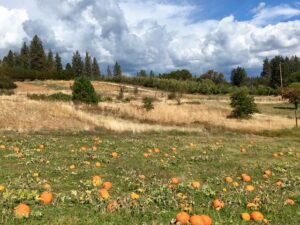
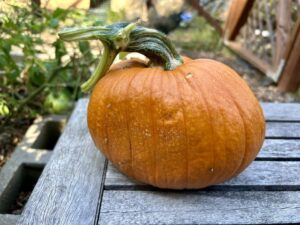
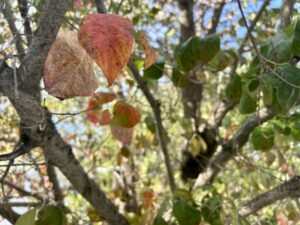
Autumn has officially arrived, and with it pumpkins, apples, and the first falling leaves. Corn mazes are springing up and Halloween costumes and décor are on display at Costco. We have cooler evenings and darker mornings. But also? Another season is here, judging from emails from my health insurance company and signs posted at local pharmacies. These signs remind passersby that it’s time to make appointments. It’s not just autumn, friends. It’s also “Shot Season.”
One of my friends got COVID-19 shots and flu shots yesterday. He woke up in the middle of the night with a fever and isn’t feeling great today. Another friend got her COVID and flu shots last week and also had a rough day the next day, when she mostly stayed in bed. I just scheduled my vaccine appointment for Friday after work so that, if the shots affect me, I’ll have a weekend to recover. It might be annoying to spend a beautiful autumn day resting, but it is far better than getting a full-blown case of COVID. Apparently, I am very much a fan of vaccines.
When the first COVID vaccines came out years ago, many people also felt rotten the next day. We polled each other, asking our friends and coworkers, “Did you get your vaccine? First dose? Second dose? Which kind, Pfizer or Moderna? How did you feel after?” Nobody looked forward to next-day illness, but mostly it was accepted that a little sickness after a COVID vaccine was much better than coming down with the disease itself. It’s easy to forget how destructive and terrible that time was, how everything shut down and we were told to stay home. It’s easy to forget how many people died.
I am remembering how grateful I was when the first COVID vaccines came out. I drove to Roseville to the former county fairgrounds, where the health department had set up a mass immunization center. There were long lines of people waiting to get shots and rows of health care workers at tables at the front of the room, efficiently administering them. After our shots, we sat in folding chairs and waited a few minutes, just to make sure we didn’t have any immediate negative responses. The entire experience made me a little teary-eyed, the way the community came together, how it seemed like there was finally hope for lessening the effects of a terrible disease that had already killed so many.
And now? The federal government is not really encouraging vaccines so much. The New York Times reported recently that major medical organizations, including the American Medical Association, issued vaccine recommendations based on reviews of the latest scientific evidence because “the federal government is not fulfilling that responsibility in the way that it historically has,” the chair of the Vaccine Integrity Project at the University of Minnesota said. The Food and Drug Administration (FDA) only approved updated COVID shots for people with high-risk conditions or who are at least 65 years old.
I recently had a birthday that vaulted me into a new decade, but I’m still a few years away from that age. Thankfully, I live in a state where pharmacies can provide updated COVID vaccines for anyone six months or older who wants one, in spite of the federal government adopting those stricter guidelines. My state has adopted its own vaccine recommendations, and the governor signed a bill requiring insurance plans to cover state-endorsed vaccines. This is not the case nationwide, though. There are places where it will be difficult for people who do not meet the federal guidelines to receive their shots. There are places where people will fall ill because of this.
It’s disheartening that the federal government is ignoring scientific research and mainstream medical advice. Earlier this month, our Health and Human Services Secretary Robert F. Kennedy Jr. told an anti-vaccine nonprofit he founded that they have a “strong and steadfast friend at the White House.” This “strong and steadfast” friend supposedly cares about the nation’s health but has presided over a time when measles cases have skyrocketed nationwide. The MMR (measles, mumps, and rubella) vaccine is highly effective and usually provides lifelong protection. How many people were persuaded by Kennedy to limit their children’s vaccines or abandon them all together? How many of those children suffered through measles?
Fortunately, I grew up in a time when vaccines were lauded and encouraged by the federal government. I also had a mother who made sure I got everything that was recommended. My mom grew up in a time when people were stricken with polio, and she saw how devastating that was. My older sister got mumps as a youngster and lost hearing in one ear. When the MMR vaccine came out in 1971, I’m sure I was given it right away. Vaccines have long been a helpful, healthy part of my life.
So I’ll head to Target after work today, roll up my sleeve, and get my shots. I’ll be thankful that I live in a state where basically anyone can receive them. I’ll take it easy this weekend if I need to. I might miss being out in the world, miss seeing leaves turn red, pumpkins at the market, and the first signs of autumn. I love autumn and am grateful for the changes it brings. But even more than that? I am grateful for “Shot Season”—that it’s here, that there’s something I can do to reduce my risk from COVID and the flu. “Shot Season” might be the season of the year that I am most thankful for. In some ways, it might be my favorite season of all.



No Comments